
The Importance of a Healthy Diet
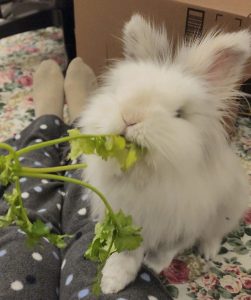
A balanced diet for a rabbit includes protein, starch, carbohydrate, vitamins, and minerals in slower moving digestible material that can be absorbed. It also includes large amounts of fast-moving indigestible organic material.
Hay
Hay is the most important part of a rabbit’s diet and should be fed unlimited. Grasses are a balanced source of vitamins, minerals and indigestible fibers. The fiber keeps their gut moving and the chewing can prevent molar spurs. This is because chewing helps wear down their teeth and helps maintain a normal dental occlusion. A diet lacking in fibrous materials can cause teeth to over. Diets low in indigestible fiber can lead to gastrointestinal hypomotility (GI stasis) and trichobezoars (furballs).
There are generally two types of hay – grass hay which has long thing leaves with a central talk, and legume hay such as alfalfa or clover (which are higher in calcium and protein). Alfalfa hay is good for young rabbits but once they become adults they should be switched over to grass hays like timothy, brome, oat and orchard. It is usually recommended that timothy hay be the primary type fed to an adult rabbit. Talk to your vet for diet information specific to your rabbit.
Hay can be purchased online, bought in pet stores, or from a farm or feed store. If buying from a farm or feed store be sure to get horse quality hay and not cow quality. Due to RHDV, you will want to ask about their RHDV protocols. The hay should smell fresh like grass. Hay can contain mold which is toxic to rabbits, therefore it is recommended that you smell your rabbits hay often! Get used to the smell of fresh hay, so you can spot mold immediately.
Vegetables
Vegetables are also an important part of a rabbits diet. Be sure to wash them carefully to eliminate debris and pesticides. Vegetables are best served wet especially if you have a bunny that doesn’t consume too much water. For a young bunny or a new bunny, vegetables should be introduced very slowly; one at a time over days to watch for loose stool. Not all vegetables are tolerated by all rabbits. 2 cups per 6 pounds of bunny weight is often suggested, which should include 3 or more types of vegetables. Again, talk to your veterinarian for guidelines specific to your rabbit.
Some bunny favorites are parsley, romaine lettuce, dandelion greens, carrot tops, endive, red or green leaf lettuce, basil and dill. Vegetables high in calcium (kale, spinach) should only be fed in very limited quantities and very infrequently. Watch your bunny carefully for the first 12 hours after introducing new vegetables. Signs of gas include loud tummy rumblings, lack of appetite, not wanting to move around, sitting hunched up, pressing stomach into the floor, tooth grinding. Gas can be treated with simethicone. If it continues, or if you are unsure what the problem is, contact your veterinarian ASAP.
Do not feed: Bamboo shoots, beets, cassava, citrus peels, coffee plants, corn, green beans, celery, lima beans, maize, millet, onions, rhubarb leaves, potatoes (white, red or sweet), tea leaves, cabbage, cauliflower, broccoli, cucumber, etc. Dandelions/grass from outside are not safe due to pesticides and the risk of RHDV. If you grow your own veggies outdoors, be mindful of the risk of RHDV.
Pellets
Pellets make up a very small part of the rabbit diet. Look for a pellet which is high in fibre (min. 18%) low in calcium (max. 1%) and low in protein (max.14%). A 5-7 lb rabbit should only be getting 1/4 cup daily. If you have a rabbit that is overweight, and you are cutting back pellets, it is crucial that you cut them back very slowly to avoid health complications such as hepatic lipidosis (fatty liver disease).
Timothy based pellets are best for adult rabbits. Some recommend brands are:
Oxbow
Martin Mills
Science Select
Sherwood
All of those companies have a variety of foods for different life stages of your rabbit. Alfalfa based pellets are suitable for young rabbits and may be helpful for aging or thinning rabbits. Please talk to your vet to determine the best choice for your rabbit.
Fruit/Treats
Rabbits can have sensitive digestive systems. We recommend that any fruits and dried treats be fed sparingly. Treats are optional and are not required.
When feeding fresh fruit, we recommend that a serving be no more than 1 tablespoon per 5 pound rabbit and given only 1-2 times per week. Some favorite treats are banana, carrot, strawberries, apple, blueberries, watermelon, dried cranberries and papaya. Ensure that any dried fruit is oil and sugar free. Many dried fruit such as cranberries are coated with sugar and oil. You can make your own with a food dehydrator.
Dried treats that are Timothy hay based can be lower in sugar and may be easier on a rabbit’s digestive system. However they should still be fed in moderation.
If you are unsure of what is a suitable portion for your rabbit, consult with your rabbit savvy vet.
Important
When looking for a treat, stay away from products with nuts, seeds, corn (all of which are too high in fat and can cause impaction), sugar and dairy (rabbits are vegans!). Many treats found in stores labeled for rabbits are unhealthy and not suited for them. Resist the temptation to feed human snacks such as cereal, cookies, bread etc. and remember that chocolate and grapes/raisins can be toxic to rabbits.
Many healthy and bunny safe treats can be found at: http://www.store.rabbitrescue.ca/
Calcium
A diet low in calcium will help maintain your rabbit’s health. Excessive dietary calcium may contribute to the development of urolithiasis (stones). A level of 0.6-1.0% is recommended. Calcium can be found in certain types of hay, veggies and pellets, so it is important to choose what you feed your rabbit wisely. Some rabbits can tolerate more calcium than others. If your rabbit’s urine looks white or sludgy, they may have too much calcium in their diet. Speak to your vet!